
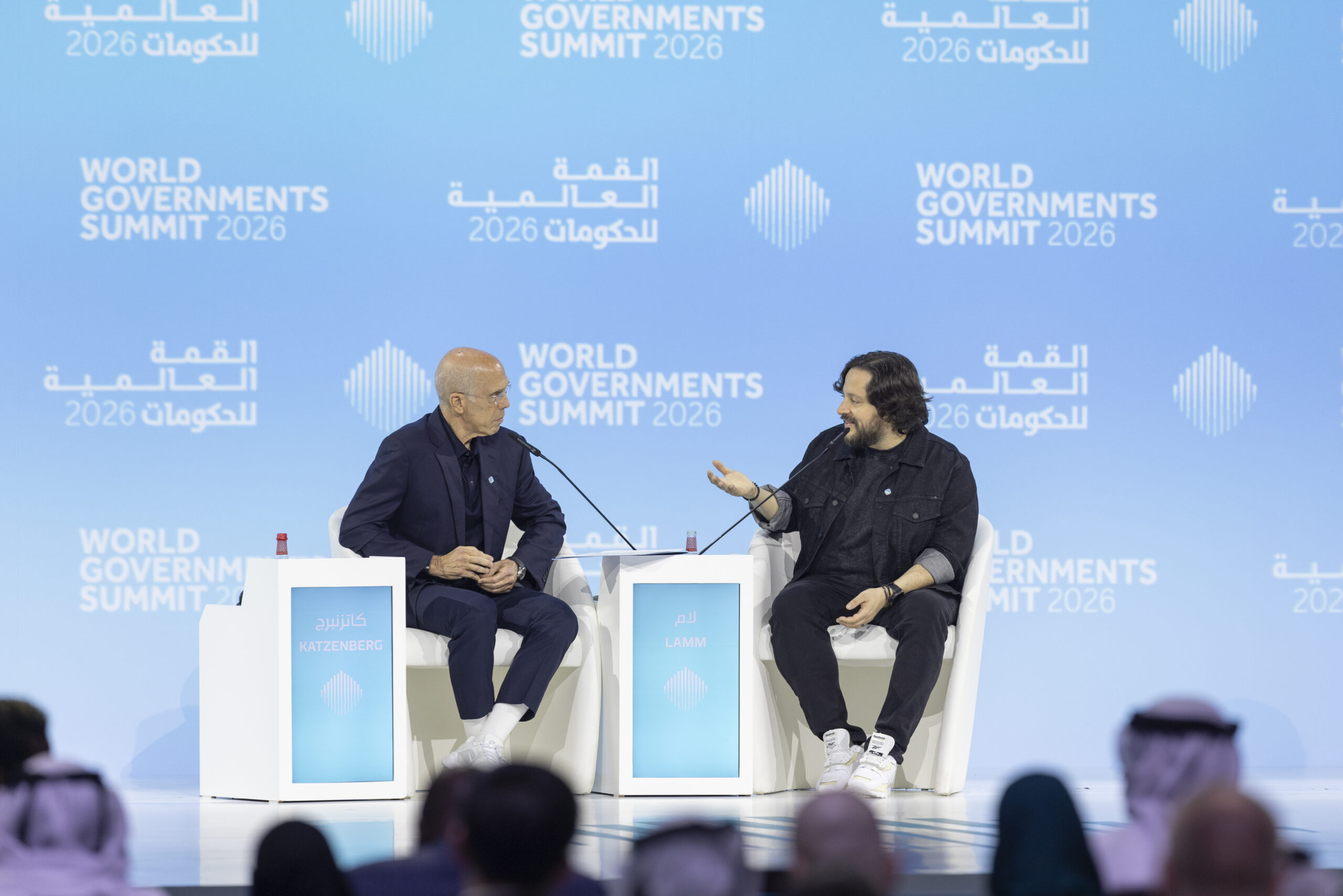
DUBAI, 4th February, 2026 (WAM) — The session titled “Can Government Keep Up with Human Imagination?”, held on the second day of the World Governments Summit (WGS) 2026, examined scientific and technological trends related to the potential revival of certain extinct animal species through advanced applications of genetic engineering and genomics.
The discussion highlighted the broader implications of this research for the future of biodiversity, ecosystem conservation, and the advancement of scientific knowledge and biological applications relevant to both human and environmental health.
The session featured Ben Lamm, Co-founder and Chief Executive Officer of Colossal Biosciences, and was moderated by Jeffrey Katzenberg, Founding Partner of WndrCo.
Opening the discussion, Katzenberg emphasised that the project represents a unique convergence of creative and human dimensions, integrating advanced technology with global efforts to protect nature and preserve biodiversity. He noted that such initiatives demonstrate how innovation can be directed toward meaningful environmental impact, before inviting discussion on how the idea originated and how it is being implemented from a scientific perspective.
In response, Lamm explained that the project was inspired by his meeting with Professor George Church, one of the world’s leading pioneers in synthetic biology and Chair of Genetics at Harvard University, who warned that up to 50 percent of global biodiversity could be lost within the next 25 years if decisive action is not taken.
Lamm said this warning served as the catalyst for transforming the idea into an ambitious scientific initiative, stressing that curiosity, entrepreneurial spirit, and the deliberate building of highly specialised scientific teams were the core drivers behind the project’s development.
He added that early scientific indicators are encouraging, underscoring the need for large-scale, inspirational initiatives, comparable to space programs, that push the boundaries of human knowledge and technological capability. Such projects, he noted, not only accelerate scientific progress but also help mobilise global attention around urgent environmental challenges.
Lamm further revealed plans to establish a global network of biobanks aimed at preserving the genetic material of endangered species, linked to educational programs targeting children and young people to foster greater interest in environmental and life sciences.
Addressing the wider implications, Lamm pointed out that research into extinct species could contribute to the development of medical applications for humans, including enhanced disease resistance and improved immune system performance, giving the initiative a significant health dimension alongside its environmental impact.
He concluded by expressing hope that the coming two decades could witness the reintroduction of extinct species into their natural habitats, strengthening environmental awareness and supporting international efforts to safeguard biodiversity.