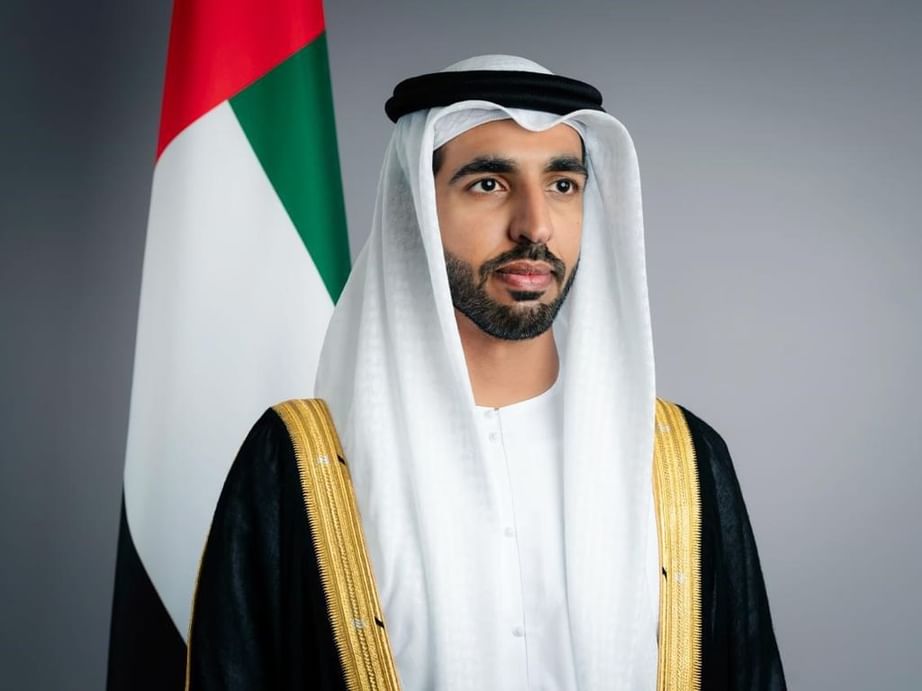
ABU DHABI, 14th February, 2026 (WAM) — Sheikh Shakhboot bin Nahyan Al Nahyan, Minister of State, affirmed that the success of the African Union’s Agenda 2063 requires partnerships built on long-term commitment and sustainable development, noting that transforming ambitions into tangible achievements requires strategic cooperation that enhances inclusive growth and economic integration across the continent.
In an opinion article published on CNBC Africa, Sheikh Shakhboot bin Nahyan said that as the 39th Ordinary Session of the Assembly of Heads of State and Government of the African Union convenes in Addis Ababa, attention is focused on translating the ambitious vision of Agenda 2063 into measurable economic outcomes.
He added that the partnership between the UAE and Africa embodies this approach, as the UAE views Africa as a strategic partner in shaping a more balanced global order, and its peoples as essential partners in addressing shared challenges, from food security to climate change.
Sheikh Shakhboot bin Nahyan noted that he conducted extensive visits last year to a number of African countries, during which he met leaders, entrepreneurs and policymakers interested in achieving practical economic outcomes.
He pointed out that trade integration, infrastructure expansion, strengthening energy capacity and effective water resource management constitute essential pillars for achieving sustainable and inclusive growth.
Sheikh Shakhboot bin Nahyan Al Nahyan affirmed that Africa is undergoing fundamental transformations that enhance its attractiveness as an economic partner, given that it has the world’s fastest-growing population, expanding consumer markets and advanced continental integration through the African Continental Free Trade Area (AfCFTA), opening the door to a new phase of economic integration and industrial ambition.
He added that the question is no longer whether opportunities exist, but rather which partners are prepared to invest for the long term and with clear objectives.
Sheikh Shakhboot bin Nahyan stressed that successful partnerships require linking trade policies with investment in infrastructure, energy development and future growth sectors, through integrated approaches across all sectors, ensuring sustainable structural transformation based on coordinated frameworks that bring together capital, logistics, energy, water and technology.
Sheikh Shakhboot bin Nahyan Al Nahyan explained that this is the approach adopted by the UAE in its cooperation with the African continent, based on trust, friendship, credibility and a shared vision for sustainable progress.
He noted that the UAE has become among the leading global investors in Africa, with investments exceeding US$110 billion between 2019 and 2023, including more than US$70 billion in green and renewable energy sectors, reflecting a long-term commitment to resilient and sustainable growth.
He added that trade represents a central pillar of this partnership, as the UAE has concluded 35 Comprehensive Economic Partnership Agreements globally, including 10 agreements with key African economies, covering cooperation in infrastructure, energy, innovation and investment, in addition to opening services sectors and enhancing market access.
Sheikh Shakhboot bin Nahyan indicated that the results of these partnerships are tangible, with trade with Kenya witnessing unprecedented growth, while the recently signed Comprehensive Economic Partnership Agreement with Sierra Leone has strengthened the trajectory of growing trade exchange, stressing that these agreements expand market access and reinforce long-term commercial partnerships, particularly with regulatory alignment and modernisation of logistics services.
He affirmed that the African Continental Free Trade Area is a key component of Agenda 2063 to enhance intra-African trade, although it currently represents only around 10 percent compared to more than 60 percent in Europe and Asia, explaining that the challenge lies not in ambition but in weak connectivity and the infrastructure required for efficient cross-border movement of goods.
He noted that the UAE has prioritised investment in logistics, particularly ports and roads. The UAE-backed US$1.2 billion Ndayane Port in Senegal is the largest private investment in the country’s history, while AD Ports Group is investing US$380 million to expand the Luanda terminal in Angola. UAE concessional finance is also supporting road and irrigation projects in Kenya and Mali following bilateral agreements signed last year, aimed at strengthening infrastructure, enabling trade and supporting economic resilience.
Sheikh Shakhboot bin Nahyan Al Nahyan highlighted that the energy sector represents a decisive pillar in supporting Africa’s economic dynamism, pointing to the ‘Etihad 7’ initiative, which aims to provide renewable electricity to 100 million people by 2035, in addition to Masdar’s US$10 billion Africa programme to deploy 10 gigawatts of solar and wind power.
He added that in 2023, the UAE launched the US$4.5 billion Africa Green Investment Initiative to support more than 50 clean energy projects. AMEA Power developed the 50-megawatt Sheikh Mohamed bin Zayed Solar Complex in Togo, supplying electricity to more than 220,000 homes. In Ethiopia, the Aysha-1 wind power agreement signed in 2024 will provide 300 megawatts to approximately 4 million households.
Sheikh Shakhboot bin Nahyan explained that digital transformation constitutes a key element in Africa’s growth trajectory, noting the US$1 billion “AI Development in Africa” initiative launched during the G20 Summit to support digital infrastructure, improve government services and enhance productivity and economic modernisation.
He added that water security represents a strategic priority, in line with this year’s African Union theme on “Assuring Sustainable Water Availability and Safe Sanitation Systems to Achieve the Goals of Agenda 2063,” noting that the UAE is strengthening cooperation with African countries in this field and will co-host the 2026 United Nations Water Conference with Senegal, to be held in Abu Dhabi.
Sheikh Shakhboot bin Nahyan Al Nahyan concluded by affirming that Africa’s long-term prospects have become clearer, and that achieving the goals of Agenda 2063 requires sustainable trade integration, strengthened people-to-people ties, expanded energy capacity, resilient infrastructure and readiness for digital transformation.
He renewed the UAE’s commitment to continuing its long-term role as a trusted development and investment partner for the continent, aligning investments with national priorities and supporting a shared vision of prosperity, stability and sustainable growth.