
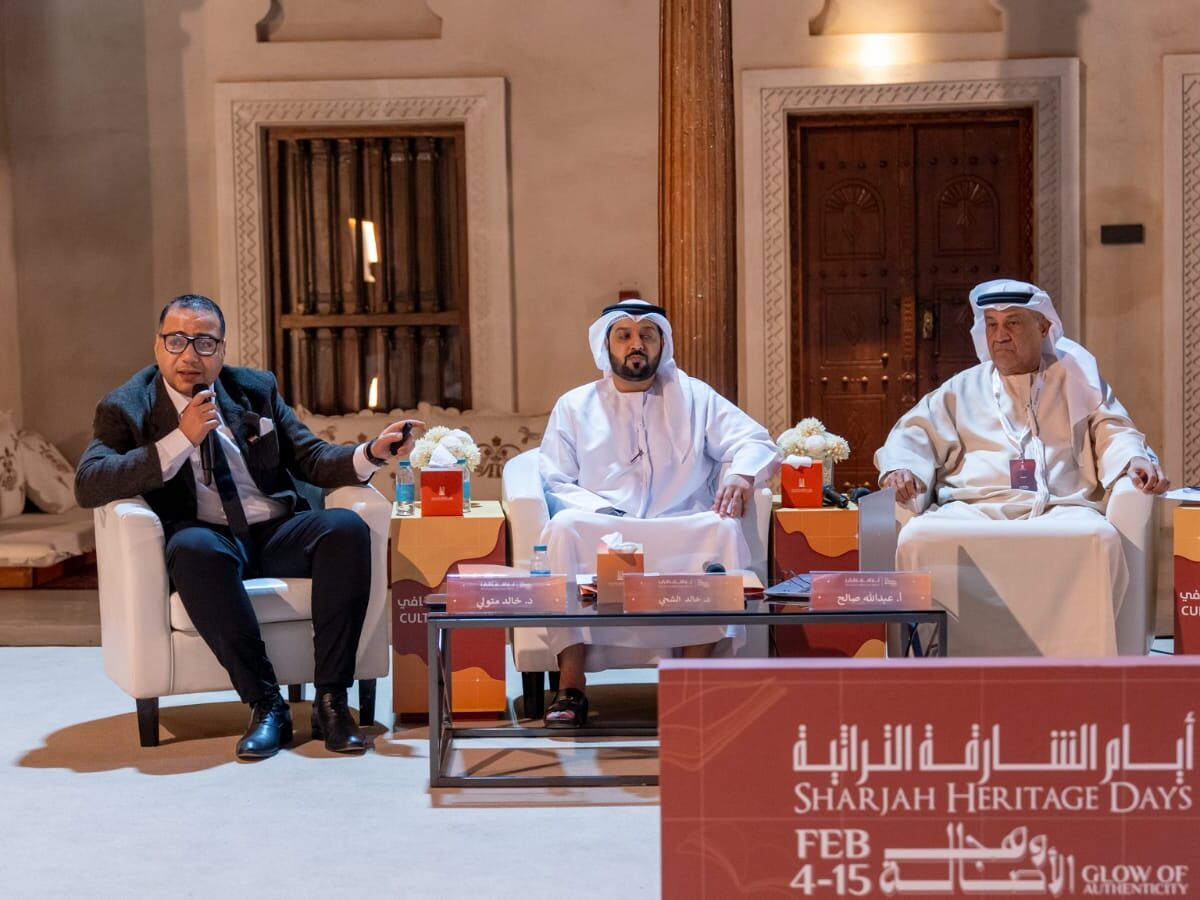
SHARJAH, 10th February, 2026 (WAM) — As part of Sharjah Heritage Days activities, Bait Al Naboodah hosted a seminar highlighting traditional crafts as a living memory of place and people, a bridge linking past and present, and a means of reinforcing the continuity of cultural identity in the collective consciousness.
In the first segment, Acter Abdullah Saleh discussed the role of traditional crafts as a memory of place and people, reviewing crafts and professions in the United Arab Emirates through a personal experience that reflected the human connection to the environment and the ability to use local resources to meet needs and express identity— demonstrating the deep relationship between craft, environment, and people.
In the second segment, Dr Khaled Metwally addressed the theme of traditional crafts between continuity and renewal, stressing the importance of developing and modernising traditional crafts to ensure their sustainability while keeping pace with contemporary changes without compromising their essence and cultural value. He pointed to the need to support artisans and transfer their expertise to younger generations through modern education and training methods.
The seminar affirmed that traditional crafts are not merely manual work or conventional products, but an authentic part of community life that reflects capabilities, values, and environmental ties. They embody stories of human struggle and creativity across generations and play a vital role in strengthening national identity and awareness of the importance of safeguarding cultural heritage.
The session was moderated by Dr Khaled Al Shehhi, Academic Director at the Sharjah Institute for Heritage, as part of the Sharjah Heritage Days cultural programme, underscoring the importance of highlighting traditional crafts as a living heritage that continues to influence the present and future.
The seminar concluded with participants emphasising the importance of continued institutional and community efforts to safeguard traditional crafts and support their practitioners, helping transmit them to future generations and strengthen their presence in the contemporary cultural scene. It also served as a platform for exchanging expertise and perspectives on developing and culturally and educationally investing in traditional crafts, reinforcing their status as a living, renewable heritage that keeps pace with the present while preserving the memory of place and people.