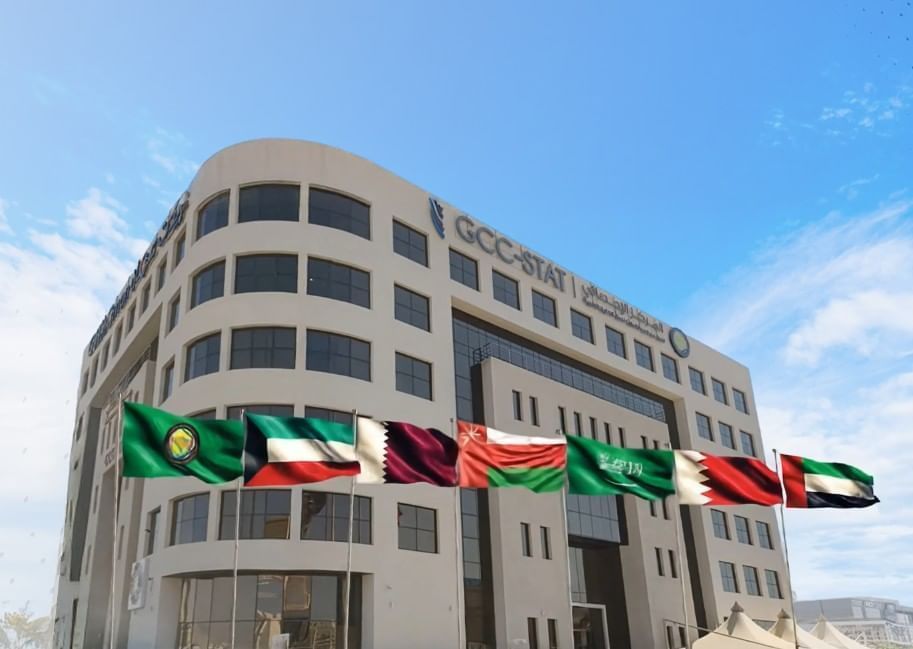
MUSCAT, 15th March 2026 (WAM) — Data issued by the GCC Statistical Centre (GCC Stat) indicate that GCC countries continue to consolidate their position as one of the most influential hubs in global energy markets, supported by a broad base of natural resources, advanced infrastructure, and accumulated expertise in managing this vital sector.
The Gulf energy strategy is no longer limited to production and export alone; it has increasingly shifted toward more comprehensive approaches based on diversifying energy sources, enhancing production efficiency, and expanding renewable energy projects.
The data released by the GCC Statistical Centre provide an analytical overview of the performance of the energy sector in the region. The value added of the Gulf oil sector at current market prices reached about USD 561.2 billion in 2024, contributing 24.0% to GDP, while the value added at constant prices reached USD 541.9 billion, accounting for 29.3% of GDP.
The data indicate a 5.4% decline in crude oil production in 2024, reaching 16.1 million barrels per day, compared with 17.0 million barrels per day in 2023. Crude oil exports also declined by 7.2%, reaching 11.5 million barrels per day, compared with 12.3 million barrels per day in the previous year.
The Centre presents a comprehensive reading of the performance of the oil, gas, and renewable energy sectors in the GCC countries through its publication “Energy Statistics”, which indicates stability in gas production and an increase in reserves.
According to the data, marketed natural gas production recorded a slight decrease of 0.4%, reaching 442.0 billion cubic meters, compared with 443.8 billion cubic meters in 2023.
The report also shows that the average annual growth rate of crude oil reserves during 2020–2024 reached 30.7%, while the average annual growth rate of natural gas reserves reached 1.0%.
In 2024, GCC countries recorded reserves of 511.9 billion barrels of crude oil and 44.3 trillion cubic meters of natural gas.
According to global energy indicators for 2024, GCC countries contributed 21.8% of global crude oil production and 26.6% of its exports.
Their contribution also reached 10.0% of global marketed natural gas production and 13.5% of its exports.
GCC countries hold 32.7% of global oil reserves and 21.2% of global natural gas reserves.
The report reveals that the total renewable energy capacity in GCC countries reached 14.2 gigawatts in 2024, representing only 0.3% of global capacity.
In addition, GCC electricity interconnection projects achieved economic savings of USD 540.5 million, while the volume of electricity exchanged among member states reached 1,795.9 gigawatt-hours.