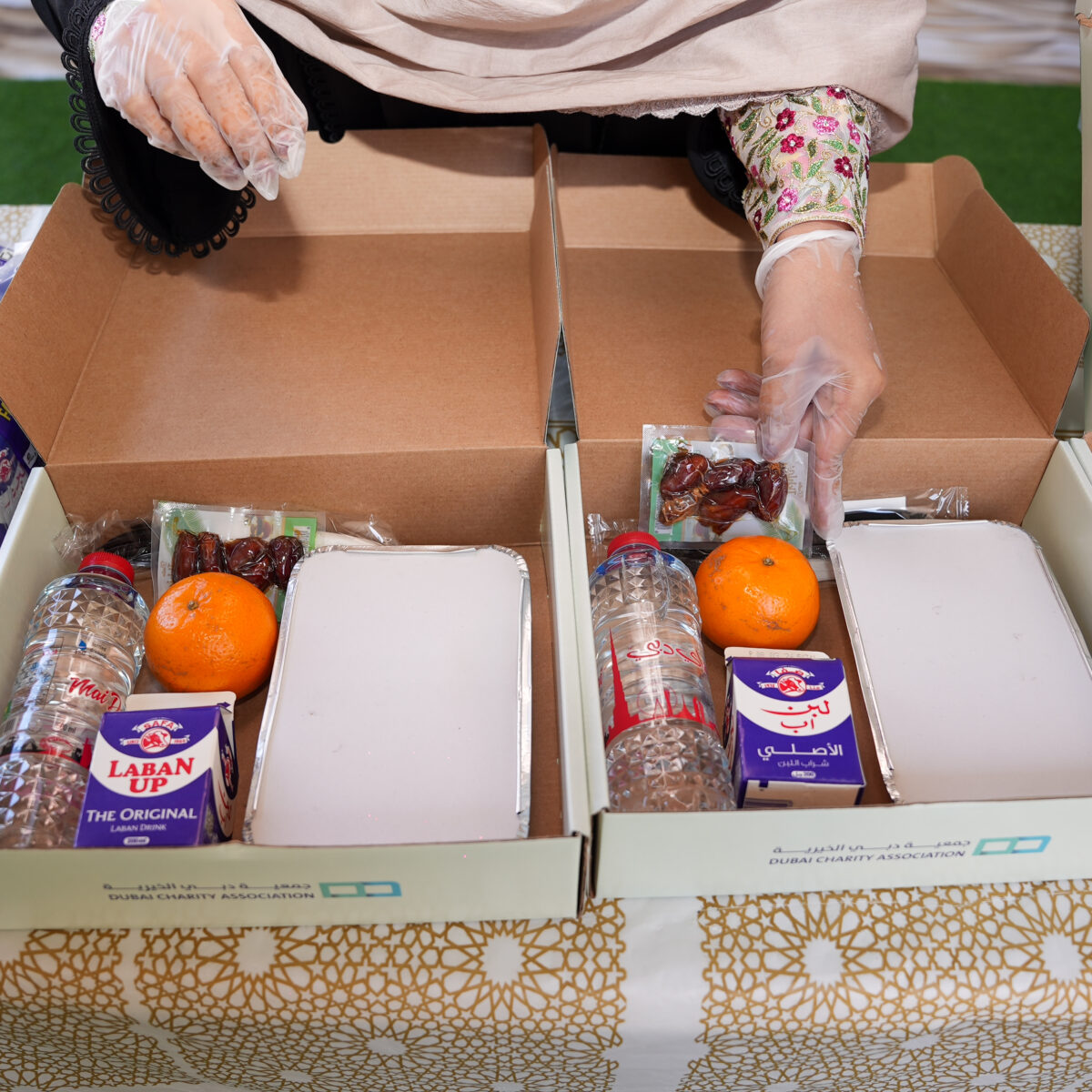
DUBAI, 18th March, 2026 (WAM) — Highlighting its sustained efforts to strengthen social solidarity, the Community Development Authority (CDA) in Dubai, in collaboration with the Dubai Charity Association, concluded the ‘Khair Dubai Be Ahlaha’ (Goodness of Dubai by its People) initiative during the Holy Month.
The initiative, undertaken in the Muhaisnah area, provided Iftar meals to members of the community while actively involving Emirati home-based entrepreneurs in preparing and providing the meals, thereby contributing to their economic empowerment by helping supplement their income.
Inspired by the vision of ‘from the people of Dubai… to Dubai,’ the initiative embodies the CDA’s approach of integrating direct community support with sustainable economic empowerment. It reinforces the idea that the community is a partner in doing good, which in turn fosters a spirit of cooperation between individuals and institutions, enhances community cohesion, and practically embodies the UAE’s values of brotherhood and solidarity. This opens new horizons for Emirati families to actively participate in serving the community.
Ali Alqassim, Director of the Financial Benefits and Empowerment Department at the CDA, emphasised that the Khair Dubai Be Ahlaha initiative is part of a vast spectrum of empowerment programmes in Dubai. These efforts aim to transition families from the circle of support to the circle of production and economic sustainability, ensuring that the spirit of giving inherent in the UAE community translates into dual benefits for fasting individuals as well as enterprising Emirati families.
Alqassim explained that the initiative’s objective is to reinforce the concept of economic empowerment and provide seasonal income opportunities that can be transformed into sustainable projects. Furthermore, it supports the culture of home-based entrepreneurship and enhances the family’s role as an active partner in the local economy.
“We are working on launching a comprehensive pathway for productive families within our empowerment plans, making this initiative a starting point for a sustainable empowerment journey,” Alqassim added. “This includes project evaluation, capacity building, brand development, and market access, with the ultimate goal of moving the family from the stage of seasonal home production to a stable project with a clear identity and genuine growth opportunities.”
For his part, Obaid Alshuweihi, Head of the Financial Empowerment Section, noted that six families running culinary enterprises benefited from the initiative this year, with the total support amounting to AED260,000. He explained that approximately 13,000 Iftar meals were prepared and distributed through Ramadan, with each family contributing an average of 70 meals daily as part of the initiative.
Alshuweihi highlighted that the CDA provides a comprehensive package that includes training on food safety and quality, logistical and organisational support, connecting families with supply chains, and monitoring and evaluating performance. The aim is to transform the experience from a seasonal activity into a scalable and growing enterprise.
Regarding the dual impact of the initiative, Alshuweihi clarified that it achieves an economic impact by supporting and empowering families economically and building practical skills in management and marketing. Socially, it provides Iftar meals for fasting residents, which enhances the value of giving and solidarity, elevates the family’s status as contributors to society, and instils a culture of work in their children. This aligns with Dubai’s direction towards family stability through empowerment and financial independence.
The initiative witnessed significant engagement from home-based entrepreneurs, who expressed their pride and honour in participating in humanitarian and community work. The families affirmed that their participation represents a great blessing and a genuine opportunity to earn rewards and foster the spirit of solidarity.
Families participating in the initiative served up a sumptuous menu including traditional Emirati main dishes, in addition to Ramadan specialties, hot and cold desserts, and more, while following approved standards as stipulated by home business licences.
The families acknowledged that the initiative positively contributed to improving their income during Ramadan, alleviating pressure on their budgets and enhancing their financial stability. They also received moral and material support from the CDA, alongside organisational directives and guidelines regarding the distribution mechanism and food safety regulations.
Despite the inherent challenges of time pressure and ensuring the swift distribution of meals while maintaining food quality and safety, especially before the Maghrib call to prayer, the participating families managed to overcome these hurdles through advance planning and organised task distribution.
The families shared touching accounts of their work, expressing their immense satisfaction at seeing the joy of those ending their fast and hearing their sincere prayers, whether from petrol station workers or delivery personnel transporting the meals to mosques. This strongly motivated them to continue their engagement with the initiative, they said.
Looking ahead, the families aspire to transform their projects into sustainable businesses operating all year round by expanding production capacity and the number of beneficiaries, opening permanent restaurants or sales outlets, and launching projects with an Emirati character while aiming for global clienteles. They also aim to participate in major events including Global Village, affirming that their ultimate goal is to enhance the humanitarian dimension of the project while serving the wider community.