ST. PETERSBURG, 2nd April, 2026 (WAM) — Suhail Mohamed Al Mazrouei, Minister of Energy and Infrastructure, affirmed that the accelerating geopolitical developments, particularly in vital maritime corridors, are creating a new reality for the global trade system. This, he noted, calls for a clear and proactive approach to addressing geopolitical challenges, as well as a firm commitment by all countries to ensuring the security of the key waterways that connect the world and to strengthening the resilience of global supply chains.
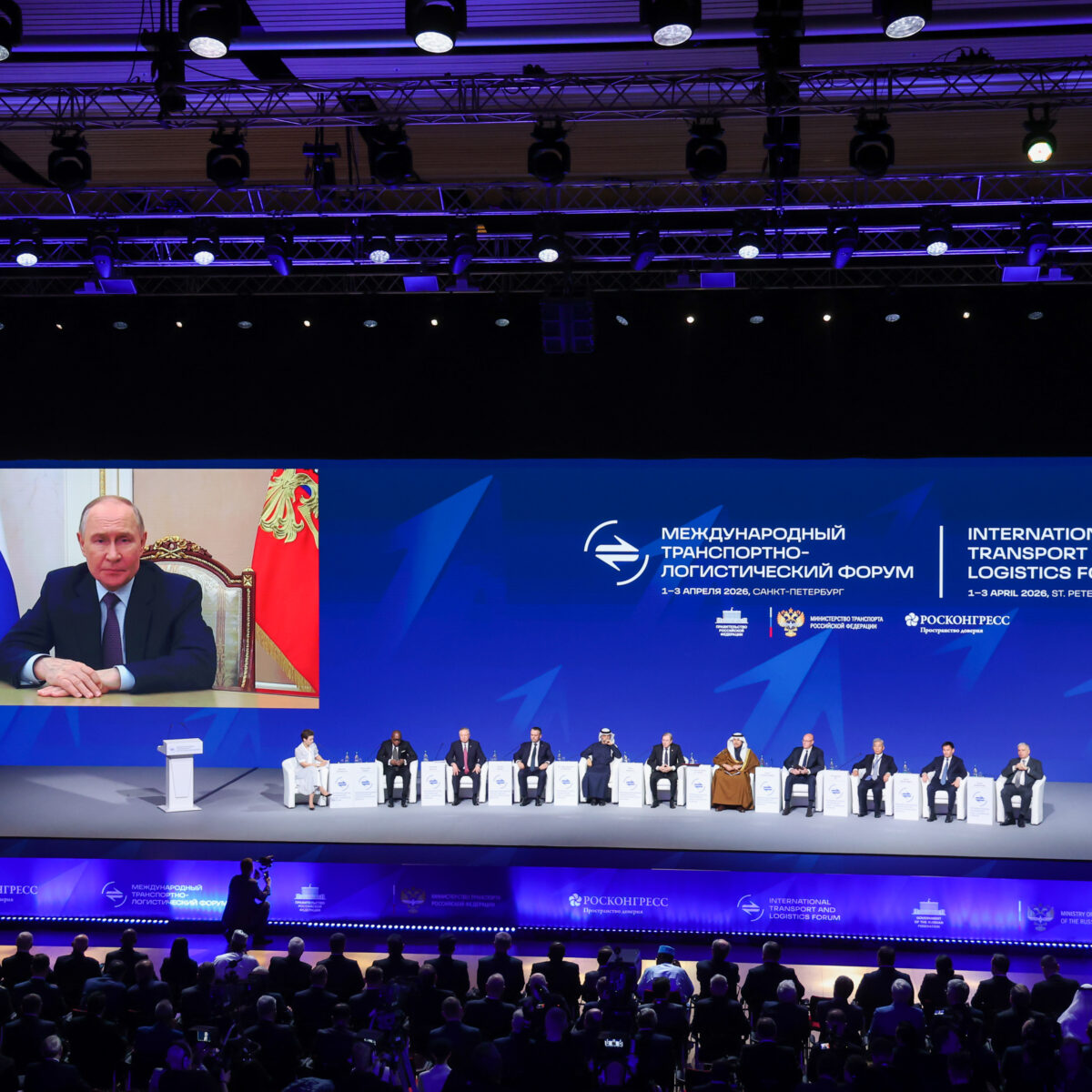
His remarks came during his participation in the Transport and Logistics Forum, held in St. Petersburg, Russia, which was inaugurated by President Vladimir Putin. In his opening address, President Putin emphasised that Russia is working to digitize the transport market and advance logistics and autonomous systems, and that it is ready to exchange expertise and launch joint science and technology programs to support the development of a modern transport system aligned with the demands of the 21st century.
President Putin also described the transport and logistics sectors as a fundamental pillar of the global economy, noting that they are currently undergoing profound transformation and facing major geopolitical challenges.
During the opening ministerial session, Al Mazrouei presented the UAE’s vision for developing an integrated and resilient transport and logistics ecosystem capable of adapting to growing global challenges.
He explained that Iran’s closure of the Strait of Hormuz and its targeting of commercial vessels and oil and gas tankers constitute an unprecedented threat to global supply chains, with direct repercussions for the stability of international markets and rising commodity prices. He stressed the importance of collective international action to safeguard freedom of navigation and secure supply routes.
Al Mazrouei added that the challenges facing certain strategic maritime corridors in the region represent a deeply concerning precedent in the global trading system.
He emphasised that these corridors are vital arteries of the international economy and must not be subjected to any actions that threaten their security or the safety of navigation within them. He further noted that remaining silent in the face of such practices would place the global economy under constant risk.
He said, “Protecting the freedom of navigation and ensuring the safety of vessels and seafarers is a shared responsibility of the international community. We must unify efforts and stand united to confront any actions that may undermine the stability of supply chains or expose the marine environment to the risks of pollution. No country has the right to disrupt international trade flows or threaten supply routes, given the direct consequences such actions have for global energy and food security. We warn that any leniency on this issue would have far-reaching implications affecting the lives of individuals and economies around the world.”
Al Mazrouei noted that the UAE has adopted a proactive approach through investment in advanced, multimodal infrastructure, including a national railway network spanning more than 900 km, linking ports on both the eastern and western coasts. He praised the efficiency of the country’s land and maritime transport systems, as well as its federal infrastructure, and their ability to adapt and respond effectively to challenges.
He further noted that this provides practical and efficient alternative solutions for freight movement, while further enhancing the efficiency and sustainability of the logistics ecosystem.
He added, “The UAE continues to expand its capabilities through regional connectivity projects, including the Hafeet Rail Project with Oman, which will contribute to greater economic integration and increased trade capacity. We stand ready to complete and expand the railway project in the GCC region”
He also highlighted the pivotal role played by the UAE’s ports as global re-export hubs, contributing to the connection of regional and international markets and further reinforcing the UAE’s position as a key node in global trade flows.
He stressed that the next phase would require stronger international coordination, as well as continued investment in alternative trade corridors and smart, resilient infrastructure, to ensure the sustainability of global supply chains under all circumstances. He emphasised that these supply chains represent the arteries of the global economy and must not be exposed to risk.
On the sidelines of the Forum, Al Mazrouei held a series of bilateral meetings with several ministers, including Andrey Nikitin, Minister of Transport of the Russian Federation, and Makhkamov ilkhom Rustamovich, Minister of Transport of the Republic of Uzbekistan.
The meetings focused on exploring ways to strengthen cooperation and advance strategic partnerships between the UAE and both countries in the fields of transport and logistics, as well as exchanging expertise in infrastructure development and enhancing the efficiency of regional and international connectivity.
Al Mazrouei was accompanied at the event by a high-level UAE delegation comprising a number of senior officials from the Ministry of Foreign Affairs and the Ministry of Energy and Infrastructure, in addition to representatives from Etihad Rail and several national entities and companies associated with the transport and logistics sector.
This reflects the UAE’s commitment to strengthening its international presence and deepening its strategic partnerships in this vital sector.