SHARJAH, 16th February, 2026 (WAM) — Under the patronage of His Highness Sheikh Dr. Sultan bin Mohammed Al Qasimi, Supreme Council Member and Ruler of Sharjah, the Sharjah Archaeology Authority (SAA) launched “Sharjah Journal of Archaeological Studies.”
This peer-reviewed scientific journal publishes specialised research in archaeology and tangible cultural heritage, reflecting the Authority’s commitment to advancing science and scholarship and strengthening Sharjah’s position as a leading regional centre for archaeological research and cultural studies.
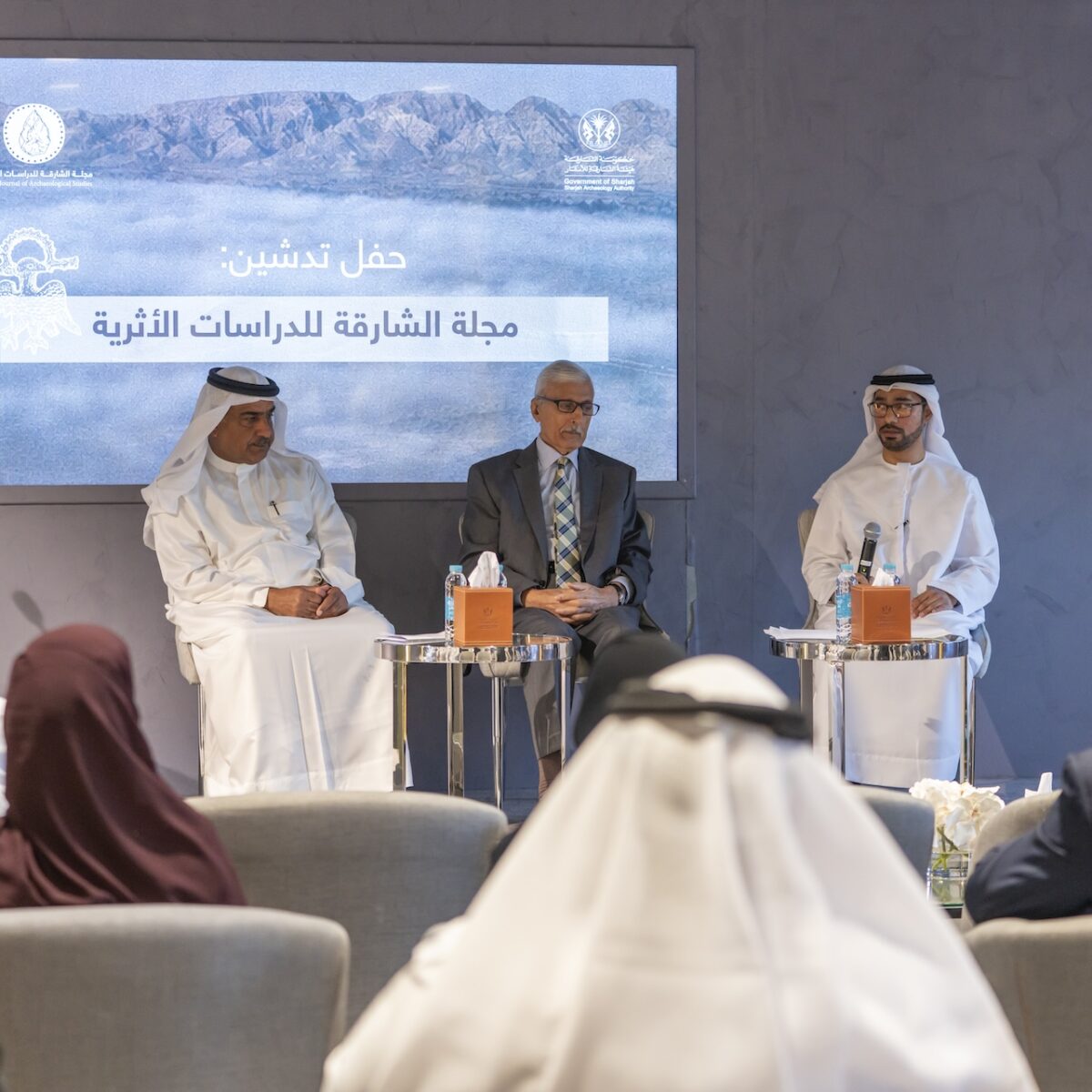
The journal will cover the history of the Arabian Peninsula and its coasts from prehistoric times. The launch ceremony was attended by Issa Yousef, Director-General of SAA; Dr Sabah Aboud Jassim, Advisor to the Authority; and Dr Saeed bin Yarouf Al Naqbi, Director of the Authority.
They participated in a panel discussion on the importance of launching the “Sharjah Journal of Archaeological Studies” and its role in supporting scientific and intellectual advancement, as well as exploring its future prospects in serving archaeological research and promoting specialised studies.
Also present were Dr Aisha Ahmed Bushlaibi, Director of the University of Al Dhaid; Salem Omar Salem, Director of the Regional Office of the Islamic World Educational, Scientific and Cultural Organisation (ICESCO) in the UAE; Professor Nasser Al Darmaki, Deputy Director of the ICCROM Regional Office in Sharjah; and delegations from the University of Sharjah, the University of Khorfakkan, and the University of Al Dhaid, along with a number of officials, academics, researchers, and specialists in archaeology and cultural heritage.
Available in both print and electronic formats, it specialises in publishing multidisciplinary research on the history of the Arabian Peninsula and its coasts, from prehistory through the historical and Islamic periods to the modern era, within a scholarly framework that situates local studies within their regional and global cultural contexts. It also opens avenues for scholarly comparison with geographically and culturally connected regions, such as the Red Sea, the Arabian Gulf, and the Indian Ocean, thereby fostering a comprehensive understanding of the region’s civilisations and historical interactions.
Issa Yousef, Director-General of SAA, affirmed that the launch of the journal reflects the fruits of the continuous support and patronage bestowed by the Ruler of Sharjah for the advancement of science and culture. “This project is an extension of Sharjah’s established approach to investing in knowledge, promoting specialised studies, and preserving cultural heritage as a fundamental pillar of civilisational identity, a bridge between the past and present, and an inspiration for future generations.”
Dr Sabah Aboud Jassim, Advisor to the Sharjah Archaeology Authority, noted that the “Sharjah Journal of Archaeological Studies” will be a high-quality scientific addition to the specialised academic library, enriching it through the peer-reviewed research and studies it will provide, addressing archaeological topics with sound scientific methodologies.
He emphasised that the journal will serve as an important resource for researchers and those interested in this field, contributing to the documentation and dissemination of field and analytical studies. This will support the development of archaeological knowledge and enhance the quality of scholarly output related to cultural heritage.
Dr Saeed bin Yarouf Al Naqbi, Director of SAA, stated, “The Sharjah Journal of Archaeological Studies is a specialised scientific journal that contributes to documenting the region’s cultural heritage and promoting related academic studies. It opens broad horizons for researchers to publish their scholarly work to the highest standards of quality and peer review, thereby reinforcing Sharjah’s position as a scientific and intellectual centre in archaeological studies.”
The journal adopts a dual peer-review system overseen by a committee comprising a select group of professors and experts from within and outside the UAE. This ensures that published research meets the highest established academic standards. It also adopts an open access policy, providing free access to articles immediately upon publication, thereby supporting the widespread dissemination of scientific knowledge.
The journal promotes specialised studies in archaeology, the science of the conservation and restoration of archaeological sites and artefacts, cultural site management, digital archaeology, and cultural and anthropological studies. It also provides an interactive platform for academic dialogue and knowledge exchange among researchers and scientific institutions, both locally and globally.
Furthermore, as part of its strategic plan, the journal aims to have its scholarly output indexed in reputable international academic databases and platforms over the coming years, thereby enhancing the dissemination of research and increasing citations.