
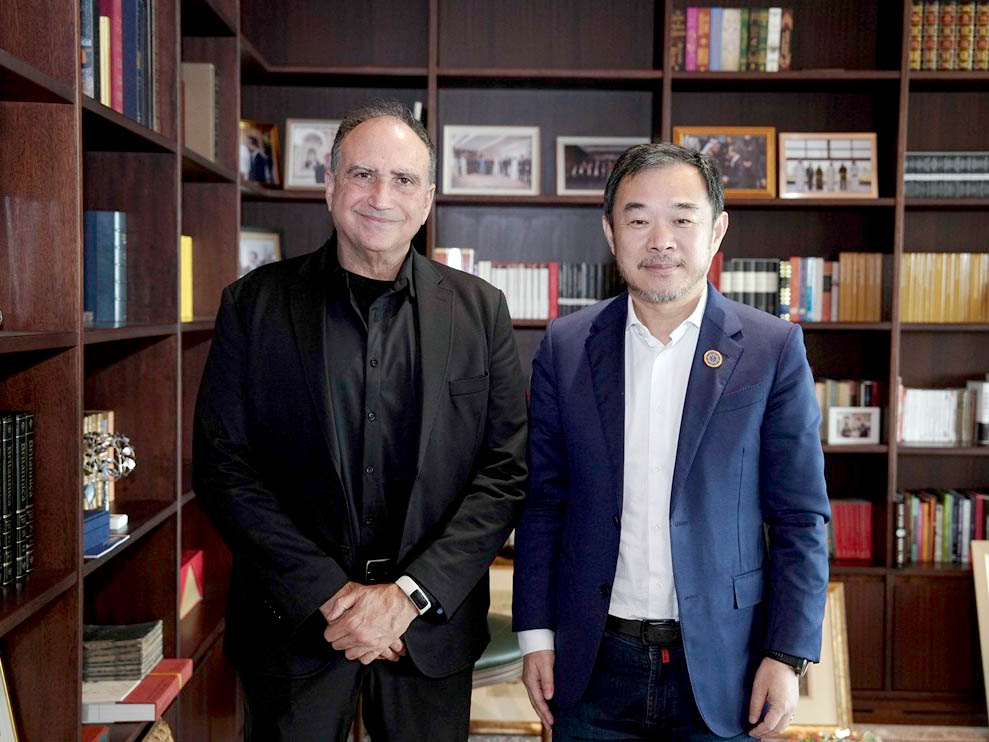
ABU DHABI, 16th February, 2026 (WAM) — Google.org has provided US$1 million in support to Dr Thamar Solorio, Vice Provost of Faculty Excellence and Advancement and Professor of Natural Language Processing at Mohamed bin Zayed University of Artificial Intelligence (MBZUAI), to lead a transformative research initiative.
The initiative is designed to dismantle a critical barrier in the digital age: the “data divide” that prevents AI from serving speakers of underrepresented languages with the same accuracy and depth as English.
While the field of AI sees discoveries and advancements daily, the language data used to train models remains heavily skewed toward data-rich, Western languages.
When applied to the complex linguistic structures and diverse dialects of the Middle East and North Africa (MENA), where a single sentiment can be expressed in a multitude of ways across the region, these language models often lose cultural nuance and technical precision. Professor Solorio’s research seeks to invert this model. Rather than merely adapting technologies built for the West, her team is establishing a native research framework grounded specifically in the sociocultural and linguistic realities of the MENA region.
“This funding allows us to take our research from an early exploratory phase to a level that can not only redefine the field, but lead to impact in people’s lives,” Dr Thamar Solorio said. “This support is vital because it allows us to move beyond adaptation of high-resource models to linguistically grounded AI for MENA languages, which highlights a much-needed paradigm shift in the field.”
Yossi Matias, Vice President, Google, and Head of Google Research, said, “We are happy to collaborate with MBZUAI, which is deeply rooted in advancing AI research and fostering regional academic talent. By focusing on low-resource languages in Large Language Models, we are progressing on the MENA AI Opportunity Initiative’s commitment to providing access to the most innovative AI technology in Arabic, its dialects and other languages spoken in the region. Funding this research aligns with our goal to accelerate scientific discovery through cooperation that delivers real-world impact.”
A central pillar of the initiative is the development of “resource-lean” AI. As global models become increasingly massive and expensive to maintain, this project focuses on efficiency, creating new training frameworks that require less manually annotated data and lower computational power. This approach is designed to democratise innovation, allowing local institutions, startups, and researchers to develop sophisticated AI tools without the need for capital or infrastructure.
Beyond technical frameworks, the funding serves as a vehicle for talent training, reinforcing MBZUAI’s reputation as the cradle for the world’s best scientists and engineers. The funding will support a new generation of postdoctoral and early-career researchers, providing them with the sustained leadership necessary to build a field that has historically been underrepresented.
The anticipated impact of this work extends into the heart of daily life, supporting real-world applications in education, cultural preservation, and digital communication. By lowering the barriers to entry for AI development, the initiative aims to empower communities across the MENA region with speech and language technologies tailored to their specific needs, ensuring no community is left behind in the rapid evolution of artificial intelligence