
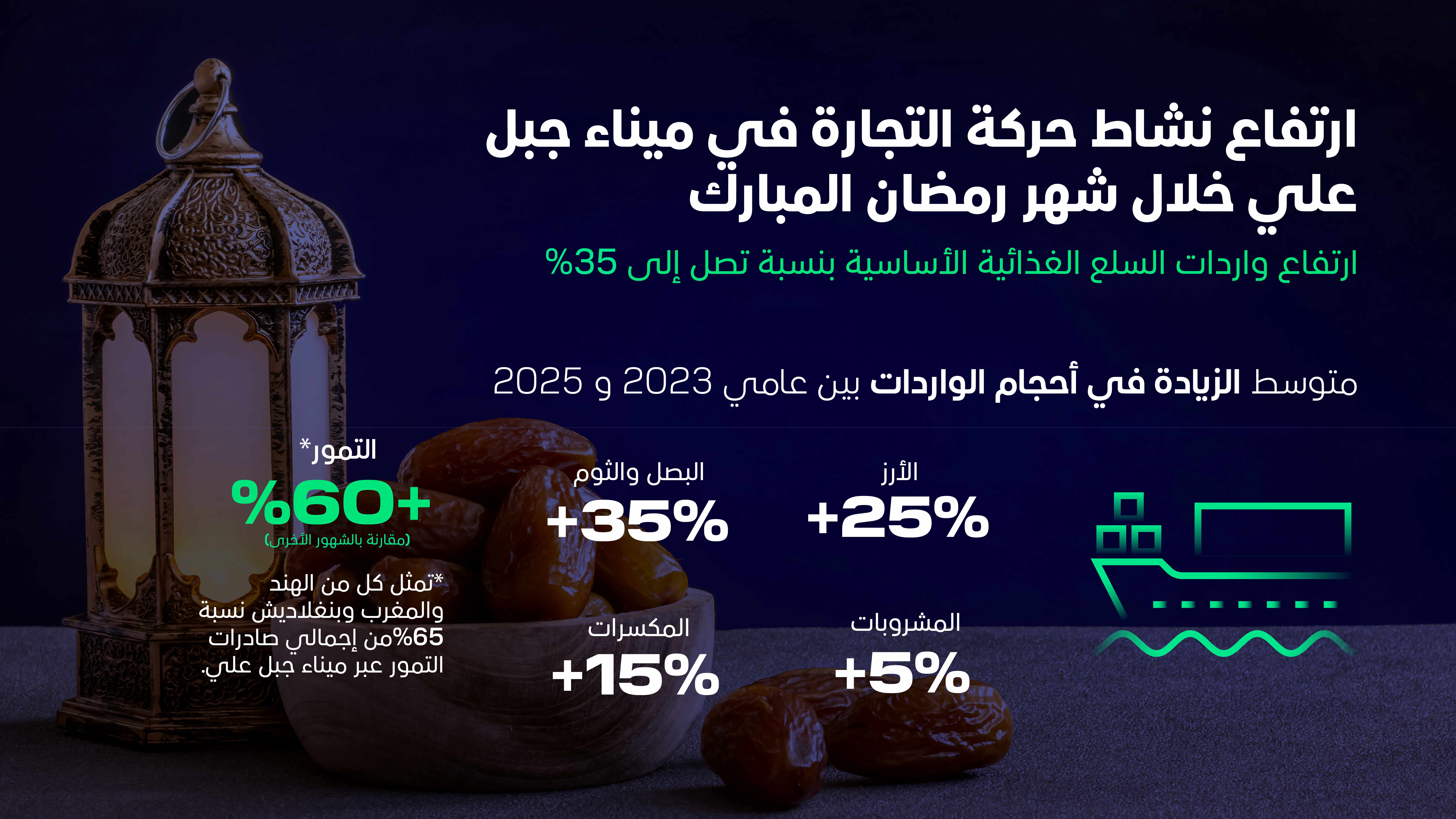
DUBAI, 12th February, 2026 (WAM) — DP World trade data showed that retailers across the region are consistently planning food supplies early ahead of Ramadan, with higher volumes of staple food goods moving through Jebel Ali six to eight weeks before the holy month.
Analysis of average volumes between 2023 and 2025 showed that, compared with a typical month, rice imports rise by 25 percent, onions and garlic by 35 percent, nuts like walnuts, almonds and pistachios by about 15 percent and beverages like juices and soft drinks by roughly 5 percent.
Ramadan brings a short but intense demand cycle for households across the region. Early stock-building helps retailers manage demand smoothly, avoid supply pressure closer to the month and ensure shelves remain well stocked for iftar, suhoor and family gatherings while maintaining stable prices.
The trend is not limited to food. Imports of kitchen and tableware increase by around 10 percent and small kitchen appliances by 9 percent, reflecting wider household preparations. While part of the January increase is linked to routine post-year-end restocking, the steady pattern year after year shows Ramadan demand plays a role.
During this period, Jebel Ali serves as an entry and consolidation point for goods coming from Asia, the Indian Subcontinent and Europe. A mix of sea, air and land transport helped move products quickly to markets across the GCC and East Africa, even during a busy start to the year.
“Ramadan is a time when demand rises quickly. What we see each year is customers planning further ahead. By bringing ports, logistics and transport together through Jebel Ali, we are able to move goods early and keep supplies steady as demand increases across the region,” said Abdulla bin Damithan, CEO and Managing Director of DP World GCC.
Operation during this period focused on handling a wide range of consumer goods, from packaged foods to fresh, chilled and frozen products. Extended operating hours and closer coordination across the supply chain helped protect temperature-sensitive cargo and improve efficiency by more than 25 percent during the peak period.
Jebel Ali also plays an important role in supporting exports ahead of Ramadan. During January and February, date exports see close to a 60 percent increase compared with a typical month, helping supply neighbouring markets across the GCC and East Africa.
India, Morocco and Bangladesh were the main destination markets for date exports last year, accounting for 65 percent of total export volumes through Jebel Ali Port.